Showing posts with label Books. Show all posts

Thursday, February 21, 2013

An Adventure In Romans, Part 6 - Charles Hodge (Chapters 9-12)

Following are some quotes from Charles Hodge's Commentary on Paul's Letter to the Romans. These are quotes that stood out to me as I have been reading through this commentary. This only covers chapters 9-12. Some background to this is posted here. I think most of the quotes are self-explanatory, but please comment if you have any questions.


The plan of salvation by faith does not require us to do what cannot be done and which is now unnecessary; it does not require us to provide a Saviour, to bring him down from heaven, or to raise him from the dead. A Saviour has been provided, and we are now required to believe.- Charles Hodge on Romans 10:6-7


It is very important to know what the Bible teaches both about the object and the nature of saving faith That object is Christ, and saving faith is trust. He is so complete a Saviour as to be able to save all who come to God through him; and therefore everyone who trusts in him will not he put to shame.
- Charles Hodge on Romans 10:11

It is obvious that foreseen works are excluded as much as any other. For a choice based on the foresight of good works is really made because of works as much as any choice can be, and consequently is not of grace in the sense asserted by the apostle.
- Charles Hodge on Romans 11:6

The apostle, having finished his description of the plan of redemption and presented clearly the doctrine of justification, sanctification, the certainty of salvation for all believers, election, the calling of the Gentiles, the present rejection and final restoration ot the Jews, in view of all the wonders and all the glories of the divine dealings with men, pours out this sublime and moving tribute to the wisdom, goodness, and sovereignty of God. Few passages, even in the Scriptures, can be compared with this for the power with which it presents the idea that God is all and man is nothing.- Charles Hodge on Romans 11:33-36

Whatever gratitude the soul feels for pardon, purity, and the certain prospect of eternal life is called on to ensure its consecration to that God who is the author of all of these mercies.
- Charles Hodge on Romans 12:1

Believers are to share in everything, because they are all members of the body of Christ. The members of the same body have the same interests, feelings, and destiny. The joy or sorrow of one member is the joy or sorrow of all the others. The necessities of one are, or should be, a common burden.
- Charles Hodge on Romans 12:13

Thursday, February 7, 2013

An Adventure In Romans, Part 5 - WH Griffith Thomas (Chapters 9-12)


Following are some quotes from WH Griffith Thomas's Commentary on Paul's Letter to the Romans. These are quotes that stood out to me as I have been reading through this commentary. This only covers chapters 9-12. Some background to this is posted here. I think most of the quotes are self-explanatory, but please comment if you have any questions.

The clay of human life can be moulded by surrender; it can also he marred by disobedience; and above all it can be made by obedience. Those two truths, God's Sovereignty and Man's Responsibility, are to be believed firmly, held tenaciously, proclaimed fully, and our life is to be lived in the light thereof.
- WH Griffith Thomas on Romans 9:19-29

He asks for trust even though He does not explain, and the result of our trust in Him is that we are not put to shame. Faith gives insight and foresight. Faith gives fearlessness and fortitude. Faith uplifts and transforms life. Faith brings salvation and satisfaction. Faith inspires life and elicits hope. Faith gives value to all problems and mysteries in life. Faith gives victory over all the conflicts of life.

- WH Griffith Thomas on Romans 9:30-33

When a man comes to realize that life demands righteousness he can proceed along one of three ways: (1) He may endeavor to restore himself; or (2) to rest upon the mercy of God; or (3) endeavor to blend the two methods and divide the work between God and himself. But he very soon comes to see that the second course is the only possible one. He cannot remove the guilt of his own past, for God only can do this. Nor can man guarantee his own efforts the absolute perfection of righteousness in regard to character and conduct. Hence it is wholly impossible for him to be saved, unless he is willing to saved in God's way.

- WH Griffith Thomas on Romans 10:1-4

This twofold emphasis on heart and mouth is important; the mouth without the heart might be hypocrisy, while the heart without the mouth might be cowardice.
- WH Griffith Thomas on Romans 10:9-10

We trust people by knowing them. The longer we spend with our Bible in getting acquainted with God, the stronger, more practical, and more blessed will our faith be.
- WH Griffith Thomas on Romans 10:17

There is no goodness in things evil, and God can never bring good out of evil, because there is no good in it to bring out. What God does is bring good to pass instead of evil.
- WH Griffith Thomas on Romans 11:11-16

"Saved to serve." God's chosen men are His "choice" men, and all through Scripture His choice men do not lie on "flowery beds of ease" but endure hard, sometimes sacrificing on behalf of others. We must never forget this.
- WH Griffith Thomas on Romans 9-11

The grace that saves has already been established as the foundation principle of salvation, and this is necessarily the ground of all Christian consecration and morality. It is because we are already recipients of the mercies of God that we must and can live the true life. We work from, not for salvation. The should that is united to Christ by faith is ready to learn and to do its duty, for the simple but sufficient reason that it knows it can appropriate without reserve the marvelous resources of Divine grace.
- WH Griffith Thomas on Romans 12:1-2

Humility is the direct effect of consecration, because pride is, and ever has been, the great enemy of true righteousness. Even the Apostle in making this appeal expresses his own true Christian lowliness, for he speaks "through the grace that was given."
- WH Griffith Thomas on Romans 12:3


If only the spirit of preference for others, and determination to sink our own position and reputation had been more in evidence in the Christian Church, what differences it would have made in individual and corporate life.
- WH Griffith Thomas on Romans 12:10

Sunday, December 23, 2012

An Excellent John Piper Book I Read Recently

A couple of weeks ago, I finished reading Jesus: The Only Way to God--Must You Hear the Gospel to be Saved? by John Piper on my Kindle app (have I said I love reading on my tablet?).

This book was an enjoyable read, and at only 123 pages isn't very lengthy. Piper gets to his points backing them up with scripture. Below are jsut some of the 29 passages I highlighted in the book. Here's a link to them all (if you have an Amazon account, you can login and see my highlights).

Though this quote is at the end of the book, I will put it first so that you will have an idea of what Piper's argument is in this book:
I have tried to answer three questions with arguments and illustrations from the Bible: Is there an eternal hell of conscious torment to be rescued from? Answer: Yes (Chapter 2). Is the death and resurrection of Christ essential for that rescue? Answer: Yes (Chapter 3). And do people need to hear this good news and believe it in order to be rescued? Answer: Yes (Chapters 4-7).
Many believe that the Bible is something that enslaves us and that without it we may be free. Piper asserts, correctly, just the opposite:
If we are cut loose from the anchor of God’s Word, we will not be free. We will be slaves of personal passions and popular trends.
Here, Piper is showing us the positive aspects of being rescued from hell as well as pointing out those blessed things which the lost will not have.
Implicit in the rescue from hell is the experience of praising God forever, and loving people forever, and enjoying creation forever, and creating beauty forever. All of this will be lost by everyone that the good news of Jesus does not reach. So what is at stake in diminishing the universal necessity of the gospel is the everlasting pleasures of people personally praising God, loving others, enjoying God’s creation, and creating beauty. This is what people lose by not hearing and believing the gospel of Jesus.
Perhaps one of the best brief explanations of Romans 5:
As the sin of Adam leads to condemnation for all humanity that are united to him as their head, so the obedience of Christ leads to righteousness for all humanity that are united to him as their head—“those who receive the abundance of grace” (Romans 5:17).
The following quotes are related to the question of whether people can be Christians by either (1) ignorantly worshiping God, (2) never hearing the gospel, or (3) believing in Jesus but never knowing His name:
(1) And we will see that even when there is some knowledge of the true God (as in the case of Cornelius in Acts 10), the worship of the true God “ignorantly” is not a saving act.

(2) N
otice that the message itself is essential. The gospel is the power of God unto salvation.

(3)
If one is saved by Jesus incognito, one does not speak of being saved by his name.
In response to devoutly following one's own convictions but not having saving faith, Piper relates to us when and with whom the gospel began:
The gospel got its start among the most devout people in the world at that time—the Jews. They had more advantages in knowing God than any of the other peoples of the earth. Yet they were told again and again: Devoutness and works of righteousness and religious sincerity do not solve the problem of sin. The only hope is to believe on Jesus
And there is hope because God still has a people to call His own!
And he will now gather in all those among the nations who are called by his name! It is his new work! All those who are predestined will be called (Rom. 8:30). All those who are foreordained to eternal life will believe (Acts 13:48). All those who are ransomed will be gathered from every people under heaven (Rev. 5:9). God himself is the chief agent in this new movement, and he will take out a people for his name among the nations (Acts 15:14).  
Finally, we as believers must take this to heart and be convicted to reach the lost for Christ!
Charles Hodge is right that “the solemn question, implied in the language of the apostle, HOW CAN THEY BELIEVE WITHOUT A PREACHER? should sound day and night in the ears of the churches.” 

Monday, November 5, 2012

Are the New Testament Documents Reliable?

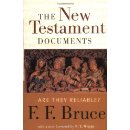
I've been reading a lot more lately, specifically using the Kindle app. I just finished reading The New Testament Documents: Are They Reliable? by F. F. Bruce. If you've known me any length of time, you'll know that I am a big fan of Dr. Bruce.

If you have ever wondered about the reliability of the New Testament and the texts behind them, then this book is a great place to start. If you have a Kindle, I can loan the book to you.

I highlighted a lot in this book, and will share a couple of things below. But before doing that, I believe that in just 10 chapters that Bruce gives us a vast amount of information to help us come to the conclusion that what we know as the New Testament today (and since its official canonization, which he treats in chapter 3) is more reliable than other ancient texts. After some preliminaries, Bruce has a great treatment of The Gospels and their miracles, the Pauline letters, and Luke's contributions. He follows this with archaeological evidence as well as that of Jewish and Gentile writers. Somewhat surprisingly, as I'm reviewing my highlights, I see that most of what I thought was vital related to the practical aspects of what the reliability of the New Testament documents. I hope the quotes can boost your faith as well!

Two of my favorite sections were his treatment of the Gospels and those of Luke. Below will be some quotes I found extremely helpful. If you are looking for a great primer on the New Testament documents, this is definitely a book you should read!

"For the Christian gospel is not primarily a code of ethics or a metaphysical system; it is first and foremost good news, and as such it was proclaimed by its earliest preachers."

"No matter how we classify the gospel material, we never arrive at a non-supernatural Jesus."

"The gospel as preached in those early days emphasized what Jesus did rather than what He said. The proclamation which led to the conversion of Jews and Gentiles was the good news that by His death and triumph He had procured remission of sins and opened the kingdom of heaven to all believers."

"In his Argument to the Gospel of John, the great Reformer John Calvin says: `I am in the habit of saying that this Gospel is the key which opens the door to the understanding of the others.' His opinion has been endorsed by Christian thinkers of many ages, who have found in this Gospel depths of spiritual truth unreached in any other New Testament writing."

"The members of the Christian Industrial League, an organization which carries on a gospel witness among the tough characters of Skidrow, in the heart of Chicago's `Loop' area, say `that in their work they have found that St. John's Gospel is the best for dealing with these tough, hard men. Its straight, unequivocal words about sin and salvation somehow go home and carry conviction to the most abandoned, while its direct invitation wins a response that nothing else does.'"

"The same victorious power that raised Jesus from the dead is the power which operates in His followers, achieving in their lives triumph over the dominion of evil. Properly to appreciate the power of God in the resurrection of Christ, one must appreciate it in one's own experience. That is why Paul prayed that he might thus know Christ, and the power of his resurrection"

"Luke is a historian of the first rank; not merely are his statements of fact trustworthy; he is possessed of the true historic sense; he fixes his mind on the idea and plan that rules in the evolution of history, and proportions the scale of his treatment to the importance of each incident. He seizes the important and critical events and shows their true nature at greater length, while he touches lightly or omits entirely much that was valueless for his purpose. In short, this author should be placed along with the very greatest of historians." - Bruce, quoting Sir William Ramsay

"One point is worth noting, however: apart from Jewish and Christian writers, Tacitus is the one and only ancient author to mention Pilate. It may surely be accounted one of the ironies of history that the only mention Pilate receives from a Roman historian is in connection with the part he played in the execution of Jesus!"

"The spirit of these early Christians ought to animate their modern descendants. For by an acquaintance with the relevant evidence they will not only be able to give to everyone who asks them a reason for the hope that is in them, but they themselves, like Theophilus, will thus know more accurately how secure is the basis of the faith which they have been taught." 

Monday, October 29, 2012

An Adventure In Romans, Part 4 - Charles Hodge (Chapters 1-8)

Following are some quotes from Charles Hodge's Commentary on Paul's Letter to the Romans. These are quotes that stood out to me as I have been reading through this commentary. This only covers chapters 1-8. Some background to this is posted here. I think most of the quotes are self-explanatory, but please comment if you have any questions.


The hope which true believers entertain, founded upon the very nature of pious exercises, will never disappoint them. - Romans 5:5

This is Hodge's rendering of Romans 5:15 "for if it is consistent with the divine character that we should suffer for what Adam did, how much more may we expect tone made happy for what Christ has done!"

"There can be no participation in Christ's life without a participation in his death, and we cannot enjoy the benefits of his death unless we share in the power of his life." - Romans 6:4

"We strive to obey, not in order to be saved or to please God, but because God saves us without works or merit of our own, whom, because he is reconciled in the Beloved, we delight to serve." Olshausen (as quoted by Hodge on Romans 6:12)

It is as much a matter of justice that sin should be followed by death as that the laborer should receive his wages. Those, therefore, who hope for pardon without atonement hope that God will in the end be unjust. -  Romans 6:23

Romans 7:7 "Does the law produce sin, so that the fruit is to be imputed to the law itself? God forbid! Certainly not! Let it not be thought that the law is to blame. On the contrary, so far from the law being evil, it is the source, and the only source, of the knowledge of sin." as rendered by Charles Hodge

Hodge says that "by leading the apostle to expect one thing, sin deceived him by his experiencing another. He expected life and found death..." How is sin deceiving you today? - Romans 7:11

What Christian does not feel that he is unspiritual? How cheerfully he recognizes his obligation to love God with all the heart, and yet how constantly does the tendency to self and the world, the law in his members, war against the purer and better law of his mind and bring him into subjection to sin! - on the latter half of Romans 7

If we share the spiritual benefits of Christ's death, we also share in his life. If we died with him, we live with him. This is pertinent to the apostle's main purpose in this chapter, which is to show that believers can never be condemned. They are not only delivered from the law and justified by the blood of Christ, but they participate in his life. - Romans 8:6, 20


When the apostle says that believers are the heirs of God, he recognizes their claim, in and through the Redeemer, to the promised good as well as to the certainty and security of the possession. - Romans 8:17 

The purpose of God in the salvation of men was not mainly that men should be holy and happy, but that through their holiness and happiness his glory, in the person of the Son, should be displayed in the ages to come to principalities and powers. Christ, therefore, is the central point in the history of the universe. His glory, as the glory of God in the highest form of its manifestation, is the great goal of creation and redemption. -  Romans 8:29 

Tuesday, October 2, 2012

An Adventure In Romans, Part 3 - FF Bruce (Chapters 1-8)

 Following are some quotes from FF Bruce's Commentary on Paul's Letter to the Romans. These are quotes that stood out to me as I have been reading through this commentary.  This only covers chapters 1-8. Some background to this is posted here. I think most of the quotes are self-explanatory, but please comment if you have any questions.


"Flesh and spirit wage incessant warfare one against the other within the citadel of Mansoul." 

"Peace is joy resting; joy is peace dancing." FF Bruce on Romans 5 talking about peace and joy being two benefits of the Gospel. I love that!

"Paul never considered legalism as the cure for libertinism; he knew a more excellent way. When men and women yielded their lives to the risen Christ and the power of his Spirit, their inward being was radically transformed: a new creation took place." - Romans 6:1

In his death he dealt effectively and conclusively with sin, winning a victory 'that needs no second fight, and leaves no second foe." - Romans 6:10

Wretched man that I am! Who will deliver me from this body of death? Thanks be to God through Jesus Christ our Lord! (Romans 7:24, 25 ESV) - "So some have experienced more soul trials after their conversion than when they were awakened to a sense of their lost condition. 'O wretched man that I am!' is their cry till they are made perfect in holiness. But He that hath begun a good work in them will perform it until the day of Jesus Christ." - MacFarlane (as quoted by FF Bruce on Romans 7:25)

When the human spirit is in closest harmony with the Spirit of God, words may not only prove inadequate; they may even hinder prayer. But God, before whom the thoughts of all are like an open book, recognizes in those unspoken 'sighs' deep in his people's hearts the voice of the Spirit interceding for them in tune with his own will, and answers them accordingly. Indeed, God's overruling grace co-operates in all things for his people's good, even in those things which at the time are so distressing and perplexing and hard to bear. - Romans 8

Friday, September 7, 2012

A thought from 150 years ago for today's church

Have you ever stumbled on a great book when you haven't even been looking for one? Not long ago I saw that a book became free for the Kindle (via Gospel eBooks) and I downloaded it. The book is "Theology Drives Methodology: Conversion in the Theology of Charles Finney and John Nevin" by Karl Dahlfred. Although I've highlighted almost 20 sections and I'm only halfway through, I read something Thursday that I knew I should blog.

During the discussion of John Williamson Nevin's theology of salvation, Dahlfred offers this quote from Nevin (from his book "The Anxious Bench"):
The Bench makes conversion "to be the all in all of the Gospel economy,
and the development of the Christian life subsequently a mere
secondary interest" that might be "safely left... to take care of
itself."
Although "The Bench" is not something specifically used in churches today, the reasoning behind its use by Charles Finney is still widely promoted within churches today. Nevin is pointing out here the extreme error of focusing so much on the conversion event in a Christian's life without the church following through with true development of a believer's Christian walk.

This is exactly what the author of Hebrews wrote about in Hebrews 5:11-14 and Hebrews 6:1. Our savior, Jesus Christ, did not call us to make converts. But, rather, he has called us to make disciples. In Jesus' day, disciples would basically sit at the feet of their Rabbi and soak in his teachings in order to follow them.

Further, this is not just something that is an academic matter, but it has many practical implications for us. You can actually find popular pastors today saying things along the lines that they should not have to spiritually develop their flock (or even worse that they shouldn't personally take an interest in "pastoring" them - Nevin speaks about that as well) but that Christians should just be doing that on their own. This is the "taking care of itself" that Nevin wrote about above. Dahlfred goes further to point out that Finney's "Systematic Theology" does not even contain a section on The Church or her functions!

Church has become a numbers game (one could argue that much of that ties back to Finney), but that should not be the case. A great man I know says that we don't come to the church, but we come as the church! What are we missing if we only go to church for some good music or preaching? Please, don't allow your sanctification to be something that's "merely secondary interest."

Monday, August 27, 2012

An Adventure In Romans, Part 2 - WH Griffith Thomas (Chapters 1-8)


Following are some quotes from WH Griffith Thomas's Commentary on Paul's Letter to the Romans. These are quotes that stood out to me as I have been reading through this commentary. This only covers chapters 1-8. Some background to this is posted here. I think most of the quotes are self-explanatory, but please comment if you have any questions. I particularly like the last two!

"The resurrection is the proof of our acceptance, and is the antidote against all fear. 'Jesus paid it all,' and the resurrection is the receipt, the full discharge of the debt." - Romans 4:25

Justification is the strait gate through which we enter the narrow way of holiness. - Romans 6

The view of the Cross takes in Sanctification as well as Justification, to deal with sinfulness as well as sins, to apply to what we are as well as what we do. - Romans 6:3-4

Being then made free from sin, ye became the servants of righteousness. (Romans 6:18 KJV) To paraphrase Griffith Thomas on this passage - this is how God gives us the desires of our heart. Because we are "under grace", His desires have become our desires and we delight ourselves in them!

"So we, when we have died to sin, enter with Him into this same life in which, like a re-married widow, we have no other [beloved] than this new Spouse and His Spirit" - Godet as quoted by Thomas on Romans 7:1-6

When we enter into union with Christ Jesus we find a new power, the rule of the Holy Spirit, Who gives life and thereby controls the evil nature. The presence of the Spirit brings life and His power sustains it, and this gives the believer deliverance from the law of sin and death. - Romans 8:32

Natural things suit the natural man and spiritual things suit the spiritual man, As is the life within, so will be the character and conduct, for fruit always comes "according to its kind." - Romans 8:5-6

Regeneration concerns our nature and condition, while adoption concerns our position and privileges. The two are complementary aspects of our Divine sonship. - Romans 8:14

Hope is an essential element of our salvation and must never be omitted from our contemplation of what the Christian life means. Faith looks backward and upward; hope looks onward. Faith accepts; but hope expects. Faith is concerned with Him Who promises; but hope is occupied with the good things promised. Faith appropriates; but hope anticipates. It is in the power of this hope which the New Testament calls "that blessed hope" that we are to live and labor. Hope is always centered on the coming of the Lord, and included in that, on the resurrection from the dead with complete deliverance from sin, likeness to Christ, and the full revelation of our sonship to God in Him. - Romans 8:24-25

And if the child of God could realize more fully the constant presence and guidance of a loving Father he would more readily perceive that all things are really working together for his good. Let us ever live in this love of God. The more we trust the more we shall love, and the more we love the more fully we shall trust. Life is dark, but love can see. Life is difficult, but love can understand. Life is sad, but love can rejoice while waiting for that day when we shall no longer see through a glass darkly but when we shall know even as we are known. - Romans 8:28-30

Friday, March 2, 2012

An Adventure In Romans, Part 1 - Introduction

In January, 2011 I began the task of reading through some of the commentaries I have on Paul's Epistle to The Romans. The general plan was to read a section at a time in all of the commentaries and be completed with the task in 2011. Well, it's now February, 2012 and I'm just finishing up through chapter 8 (of the 16 chapters). So I'm hoping to now complete this by the end of 2012. I'm not discouraged with my progress, since I have been reading other things (see some previous posts I made at this blog) and Jen and I have also begun teaching Sunday School for the 7th grade class. It's been good to steadily plug along through the commentaries.

As Martin Luther once said, "We find in [Romans], then, the richest possible teaching about what a Christian should know."

In this first post, I would like to introduce you to the commentaries I've been reading. Then the following posts I will make will be of quotes I kept track of (and posted to Facebook along the way) during my reading with a post by each author. I plan on having 6 subsequent posts of these quotes by posting 3 from the first half of Romans and 3 from the second half.

The first is a standalone volume by WH Griffith Thomas. This is a gem of a commentary from the mid-20th Century. It is labeled as a "devotional commentary" and it is great to read. I picked up a 1956 edition many years ago and have really enjoyed reading it. I had never heard of Thomas, but basically he was an Anglican Dispensationalist who was also one of the founders of Dallas Theological Seminary. There is not a lot of emphasis on linguistics in this commentary. While it is easy to read and Thomas does have a lot of devotional/application material, it also does provide good depth into Romans.

The second is part of the Tyndale New Testament Commentary series by FF Bruce. This is truly a wonderful volume. Bruce may perhaps be my favorite author. He was a professor at University of Manchester and was aligned with the Plymouth Brethren denomination. I have read a lot of books that he has written, and this commentary on Romans is really good. It's laid out a little differently than many other commentaries I've read in that Bruce will often provide his own translation/paraphrase of a section of the scripture followed by a walk-through that may include some information about the Greek as well as references to other ancient writings (such as Dead Sea Scrolls, etc...) and then he will follow it with short comments on individual verses.

The third is from the Crossway Classic Commentaries series by Charles Hodge. Hodge, the great Presbyterian Princeton Preacher. This is by far the most technical commentary I'm reading out of the three. There really is a lot of information that Hodge provides. In some cases, such as with Romans 3:20 and the topic of our justification, he will spend 6 or more pages on a theme from that single verse.

Here are links to all the posts in the series:
Part 2: WH Griffith Thomas on Chapters 1-8
Part 3: FF Bruce on Chapters 1-8
Part 4: Charles Hodge on Chapters 1-8 
Part 5: WH Griffith Thomas on Chapters 9-12
Part 6: Charles Hodge on Chapters 9-12

Thursday, January 5, 2012

Quotes from JB Phillips' Your God Is Too Small

I was introduced to JB Phillips many years ago. He is probably most famous for his New Testament in Modern English (a somewhat paraphrased translation of the New Testament, but very well done with a great story behind it!). You can read it online here. But he also wrote a short (140 pages) book titled Your God Is Too Small. I read most of it a few years ago and a little over a month ago I picked it up and started it again. The first half of the book is about many of our misconceptions of God. The second half of the book, though, does not set out to provide a list of proper views of God, but instead Phillips discusses how God came to earth in the person of Jesus Christ to give us a right understanding of God's nature. If you get a chance, it's a great read. Below are around a dozen quotes that I liked as I was reading through it for myself. I believe all the quotes stand on their own without any further explanation, but if you have any questions please let me know.
We can hardly expect to escape a sense of futility and frustration until we begin to see what He is like and what His purposes are.
To speak the truth was obviously to Him more important than to make His hearers comfortable: though, equally obviously, His genuine love for men gave Him tact, wisdom, and sympathy. He was Love in action, but He was not meek and mild.
So far from encouraging them to escape life He came to bring, in His own words, "life more abundant," and in the end He left His followers to carry out a task that might have daunted the stoutest heart. Original Christianity had certainly no taint of escapism.
[Some Christians] prevent themselves from growing up. So long as they imagine that God is saying 'Come unto Me" when He is really saying "Go out in My Name," they are preventing themselves from ever putting on spiritual muscle, or developing the right sort of independence quite apart from the fact that they achieve very little for the cause to which they believe they are devoted.
God will inevitably appear to disappoint the man who is attempting to use Him as a convenience, a prop, or a comfort, for his own plans. God has never been known to disappoint the man who is sincerely wanting to co-operate with His own purposes.
It is refreshing, and salutary, to study the poise and quietness of Christ. His task and responsibility might well have driven a man out of his mind. But he was never in a hurry, never impressed by numbers, never a slave of the clock. He was acting, he said, as he observed God to act - never in a hurry.
All poetry and music, and art of every true sort, bears witness to man's continual falling in love with beauty, and his desperate attempt to induce beauty to live with him and enrich his common life.... Is it the eternal spirit in a man remembering here in his house of clay the shining joys of his real Home?
We can visualize a beautiful thing, but not beauty; a good man, but not goodness; a true fact, but not truth.
It was the motive and attitude of the heart that He called on men to change, for once the inner affections are aligned with God the outward expression of the life will look after itself.
Further, many people who have a vague childish affection for a half-remembered Jesus, have never used their adult critical faculties on the matter at all. They hardly seem to see the paramount importance of His claim to be God. Yet if for one moment we imagine the claim to be true the mind almost reels at its significance.
But let a man once see his God down in the arena as a Man, suffering, tempted, sweating, and agonized - finally dying a criminal's death, he is a hard man indeed who is untouched. 
Nevertheless, I tell you the truth: it is to your advantage that I go away, for if I do not go away, the Helper will not come to you. But if I go, I will send him to you. (John 16:7 ESV) - He knew very well, for example, that the followers of His own day would very quickly collapse when the support and inspiration of His own personality were removed by death. He therefore promised them a new Spirit who should provide them with all the courage, moral reinforcement, love, patience, endurance and other qualities which they would need.

Thursday, December 15, 2011

Confessions of St. Augustine

Finally, among all of my other reading, I've gotten through reading Confessions completely after starting (again) to read it again back in July. It's definitely a book that you should read if you haven't - I've learned a great deal not just about Augustine's background but also seeing how that has influenced his theology. I don't want this post to be a review of this classic, but instead I just want to post some of the things that stood out to me as I read through it. These are things that I posted to Facebook during the course of my reading. So, here are some things that stood out to me enough during my reading that I would like to keep track of the quotes. I'll preface each one with a thought or two.

This quote reveals how Augustine saw that God was drawing him and persuading him to Himself and then how God continued to lead Augustine after his conversion.
Then Thou, O Lord, little by little with most tender and most merciful hand, touching and composing my heart, didst persuade me. These things I thought on, and Thou wert with me; I sighed, and Thou heardest me; I wavered, and Thou didst guide me; I wandered through the broad way of the world, and Thou didst not forsake me.   - Confessions  6.7.
Here, we see Augustine stating that anything good that he does is only through God. And the evil deeds he did are his own. He adds that we breathe freely with the one [the good deeds] and sigh at the other. We sing hymns or we weep. And asks God to be pleased with the incense offered via the right acts. 
My good deeds are Your appointments, and Your gifts; my evil ones, are my offenses, and Your judgments....and no way forsaking what You have begun, perfect my imperfections.   - Confessions  10.5 
 This one is simple, yet profound - what is happiness in life? Rejoicing to, of, and for God!!
And this is the happy life, to rejoice to You, of You, for You; this is it, and there is no other.  - Confessions 10.32
Along the same lines is the confession of Augustine's heart -  may we have this same hope!!
This is my hope, for this do I live, that I may contemplate the delights of the Lord. Confessions
Powerful thoughts are in this quote! We often don't pray as we should or comprehend the amazing promise of Romans 8:31 that isn't just a trite promise given to us as believers but carries great weight due to what God has done for us (and what God has done for us is found in Romans 8:28-30 directly before verse 31)!
We hold the promise, who shall make it null? If God be for us who can be against us? Ask, and you shall have; seek and you shall find; knock and it shall be opened unto you. For everyone that asks receives; and he that seeks finds; and to him that knocks shall it be opened. These are Your own promises; and who needs to fear being deceived, when Your truth promises?  - Confessions  12.2
This one reminded me of John 4:13-14 - Jesus said to her, "Everyone who drinks of this water will be thirsty again, 14 but whoever drinks of the water that I will give him will never be thirsty again. The water that I will give him will become in him a spring of water welling up to eternal life."
And now, behold, I return in distress and panting after Your fountain. Let no man forbid me! of this I will drink, and so live. - Confessions  12.10
Here Augustine tells us that we're nothing without God - both inside and out. Anything the world sees as "abundance" is emptiness if it isn't from God.
This only I know, that woe is me except in Thee: not only without but within myself also; and all abundance, which is not my God, is emptiness to me. - Confessions  13.9
I really like this one! Augustine's prayer is that God's work will reflect His majesty to the end that we would love God and that those works will reflect His majesty because we have loved Him. It's very closely related to one of his other famous passages from Confessions. "Grant what Thou commandest, and command what Thou dost desire." (Confessions 10.29)
Let Your works praise You, that we may love You, and let us love You that Your works may praise You. - Confessions 13.48
Augustine ends Confessions in a twofold manner. First, he states several ways we relate to God on a daily basis - asking, seeking, and knocking. He asks that those things shall come to pass - that for which we ask shall be received, for which we seek to find, and that the door be opened when we knock. All of that with an Amen and a Thank You God! This is also very similar to the quotes from 10.29 and 12.2 above.
Let it be asked of Thee, sought in Thee, knocked for at Thee; so, so shall it be received, so shall it be found, so shall it be opened. Amen. GRATIAS TIBI DOMINE - Confessions 13.53